


A Story on how we can harness Intelligent Support to Navigate the Future of Business
Leadership today operates in an era of relentless innovation and complexity; leaders face mounting challenges to remain competitive, agile, and effective. They constantly seek innovative tools to not only manage tasks but also to amplify their decision-making and foster collaboration across their teams.
Among these advancements, virtual assistants powered by AI have emerged as game-changers. These cutting-edge tools promise to redefine how leaders operate by providing smart, adaptive, and tireless support.
Imagine having a trusted ally available 24/7, capable of analyzing vast amounts of data, offering personalized insights, and streamlining processes. Virtual assistants are more than just tools; they’re strategic enablers that can help leaders focus on what truly matters—driving growth, innovation, and impact.
But what exactly are virtual assistants, and how can they transform the way leaders approach their roles? Let’s explore their potential and how they are reshaping leadership in the modern era.
What Are Virtual Assistants?
Virtual assistants are smart AI-powered tools designed to help with everyday tasks, make sense of complex information, and guide better decisions. Think of them as digital partners that use advanced AI to interact naturally and adjust to what you need. Unlike traditional software that sticks to pre-set rules, these assistants leverage generative AI to hold dynamic, human-like conversations that feel personal and intuitive.
Generative AI enables virtual assistants to understand context and nuances, whether it’s answering a question, offering advice, or helping map out a plan. By using technologies like natural language processing (NLP), these tools don’t just respond—they engage meaningfully. Over time, they learn from interactions, becoming even better at providing solutions and anticipating challenges.
For leaders, this means less time spent on routine tasks and more focus on what truly matters. Whether it’s drafting reports, offering insights into trends, or tailoring strategies to your goals, virtual assistants are shaping up essential tools that simplify complexity and enhance productivity.
From Stupid Chatbots to Smart Assistants
We’ve all been there: interacting with a chatbot that can’t seem to understand a basic question, let alone provide a helpful response. Frustration grows as the chatbot loops through generic replies, offering no real solution. This disconnect has made many people skeptical of chatbots—and for good reason. Rule-based chatbots, often rigid and limited, struggle to address complex or dynamic needs, leaving users dissatisfied and businesses missing opportunities.
Businesses, however, are turning the page. They are embracing a new wave of smart assistants powered by generative AI. These advanced tools go beyond pre-programmed scripts to deliver adaptive, human-like interactions. Generative AI allows these assistants to understand context, process nuanced questions, and offer tailored solutions—making them far more effective and user-friendly.
In this section, we’ll explore how companies are transitioning from outdated, rule-based chatbots to intelligent assistants that solve problems and create meaningful value. By leveraging generative AI, these tools are helping businesses redefine customer engagement, boost efficiency, and drive growth.
The new way of putting your customers really first
While reviewing this article with my Customer Excellence partner, Malgorzata, she shared an insight that resonates deeply with me: “Customer excellence isn’t about just meeting expectations; it’s about anticipating needs and exceeding them in ways that build lasting trust.”
I feel that her words capture the essence of what exceptional customer experiences should strive to achieve. They aren’t abstract ideas; they serve as a guiding principle for exploring innovative ways to connect with and serve customers better.
As we explored how this technology could achieve this, one solution should stand out: intelligent assistants powered by generative AI. These tools have shifted the narrative from reactive to proactive customer engagement.
Unlike the rule-based chatbots of the past, which often frustrated users with their rigidity, generative AI allows smart assistants to engage dynamically. It offers tailored, context-aware solutions that resonate deeply with customers.
Reflecting on Malgorzata’s insight about customer excellence, I am reminded of the profound shift that generative AI-powered smart assistants bring to modern business interactions. Her perspective, emphasizing the importance of anticipating customer needs and exceeding expectations, aligns seamlessly with what these advanced tools deliver.
Imagine the possibilities:
- 24/7 Support: Smart assistants ensure customers never have to wait. They are always available, providing instant responses that reduce frustration and deliver timely service.
- Proactive Engagement: By understanding customer behavior, these assistants predict needs, recommend tailored solutions, and prevent potential issues before they arise, creating a seamless and personalized experience.
- Actionable Insights: Every interaction generates valuable data. These insights enable businesses to refine their strategies, better align services with customer expectations, and make data-driven decisions that foster growth.
With generative AI-powered smart assistants, businesses can transcend traditional service models. These tools are not just enablers of efficiency but architects of meaningful customer engagement, ensuring that every interaction strengthens trust and loyalty. This is the new paradigm of putting customers first—a vision Malgorzata eloquently champions.
One of the great values of smart virtual assistants is that they can help increase sales and growth. I recall leading a digital transformation project for a demanding department in my company. One of our biggest challenges was addressing customer inquiries outside business hours. Often, high-value leads would drop off simply because no one was available to answer their questions at the time.
To solve this, we implemented an AI-powered virtual assistant. It didn’t just handle basic queries—it guided customers through their buying journey, provided personalized recommendations, and even offered tailored discounts based on browsing behavior. I remember analyzing the first month's results and being amazed at the impact: conversion rates improved by over 30%, and we captured leads that would have otherwise been lost.
This experience taught me the transformative power of virtual assistants. They don’t just respond; they create opportunities, build trust, and help businesses operate smarter and faster.
This is just one example of how AI-powered virtual assistants transform sales-driven organizations. By integrating these intelligent tools into your business, you can unlock significant opportunities:
- Lead Identification and Qualification: Virtual assistants excel at engaging visitors on websites or social media platforms, capturing vital information such as preferences, budgets, and needs. This enables businesses to prioritize high-potential leads, saving time and effort for sales teams.
- Personalized Engagement: Unlike traditional chatbots, generative AI-powered assistants offer tailored interactions by analyzing user behavior and preferences. This human-like personalization builds trust and drives customer conversions.
- Accelerated Sales Cycles: These assistants respond instantly to inquiries, provide detailed product information, and even schedule meetings. Their efficiency eliminates delays, creating a seamless customer journey from interest to purchase.
- Alignment Between Sales and Marketing: Integrated with CRM tools like Salesforce, virtual assistants bridge sales and marketing efforts by offering insights into customer behavior, refining campaigns, and streamlining lead management.
- Improved Customer Retention: Virtual assistants offer 24/7 support, address customer needs anytime, gather valuable feedback, and maintain ongoing engagement, fostering loyalty and repeat business.
With these capabilities, virtual assistants are not just tools but strategic partners that enable organizations to grow, adapt, and succeed in an increasingly competitive market.
Challenges of Virtual Assistants
The team's excitement was palpable when I first introduced virtual assistants in the previous project. These tools promised unprecedented efficiency and responsiveness.
However, it wasn’t long before we encountered some hurdles—not technical roadblocks but challenges that made us rethink our approach to implementing them. For example, the team expressed concerns about handling sensitive customer data. They also faced some problems adapting to the conversational style of the AI, highlighting the need for more training.
These experiences taught me that virtual assistants are powerful but not without challenges. With the technology we have available today, leaders must navigate several key issues:
- Data Security: Protecting sensitive customer and business information must be a priority. Ensuring compliance with privacy regulations is crucial when deploying virtual assistants.
- Limited Understanding of Complex Queries: Virtual assistants are excellent at handling structured interactions but may falter when faced with nuanced or high-stakes questions. Clear escalation paths for human agents are essential.
- Adoption Hurdles: Teams might need time and training to fully utilize these tools, especially when adapting to AI-driven workflows.
This section will explore these challenges in more depth and provide practical strategies for addressing them effectively, helping leaders make the most of their virtual assistant implementations.
Recommendations for Leaders Implementing Virtual Assistants
When I first introduced virtual assistants in a key initiative, I was struck by their potential to transform workflows and deliver results. One example that stands out is a project where we implemented a virtual assistant to support customer interactions distributed in 5 different countries. At first, it was met with skepticism—how could AI really understand the complexities of the business? However, through careful integration and training, the assistant became an indispensable tool, streamlining processes and creating a better experience for both customers and team members.
This experience reinforced my belief that virtual assistants are not just tech gadgets; they’re strategic enablers. However, their success depends heavily on thoughtful planning and execution. To help other leaders maximize the impact of virtual assistants, I’ve distilled some key recommendations:
- Define Clear Objectives: Start by identifying specific goals. Are you aiming to improve lead generation, streamline sales processes, or enhance customer support? A clear focus ensures the assistant delivers measurable value.
- Integrate Across Channels: Virtual assistants thrive when deployed across multiple touchpoints, like websites, messaging apps, and social media platforms. This creates a seamless and consistent customer experience.
- Train and Optimize: Virtual assistants need continuous updates to perform well. Train them regularly with fresh data and monitor their performance to meet evolving business needs.
- Balance Automation with Human Touch: While automation is powerful, there will always be moments when a human connection is necessary. Ensure your assistant has clear pathways to escalate complex issues to human agents.
These steps can guide leaders in unlocking virtual assistants' true potential, ensuring they enhance efficiency and foster innovation and growth within their organizations.
Enter our Automated Gateway to Smarter Leadership
As you’ve explored the immense potential of virtual assistants in this article, it’s worth mentioning that we don’t just talk about innovation—we embody it. When you visit our website, theaienthusiast.shop, you’ll be greeted by Gosia, our Generative AI-powered virtual assistant. Named after and inspired by our Customer Excellence Partner, Malgorzata Ribeiro, Gosia doesn’t just share her name but also her commitment to anticipating needs and delivering exceptional support.
Gosia is designed and trained to make your first interaction with us seamless and engaging. Whether you have questions, need guidance, or want to explore our offerings, Gosia is there 24/7 to provide personalized assistance and ensure your satisfaction.
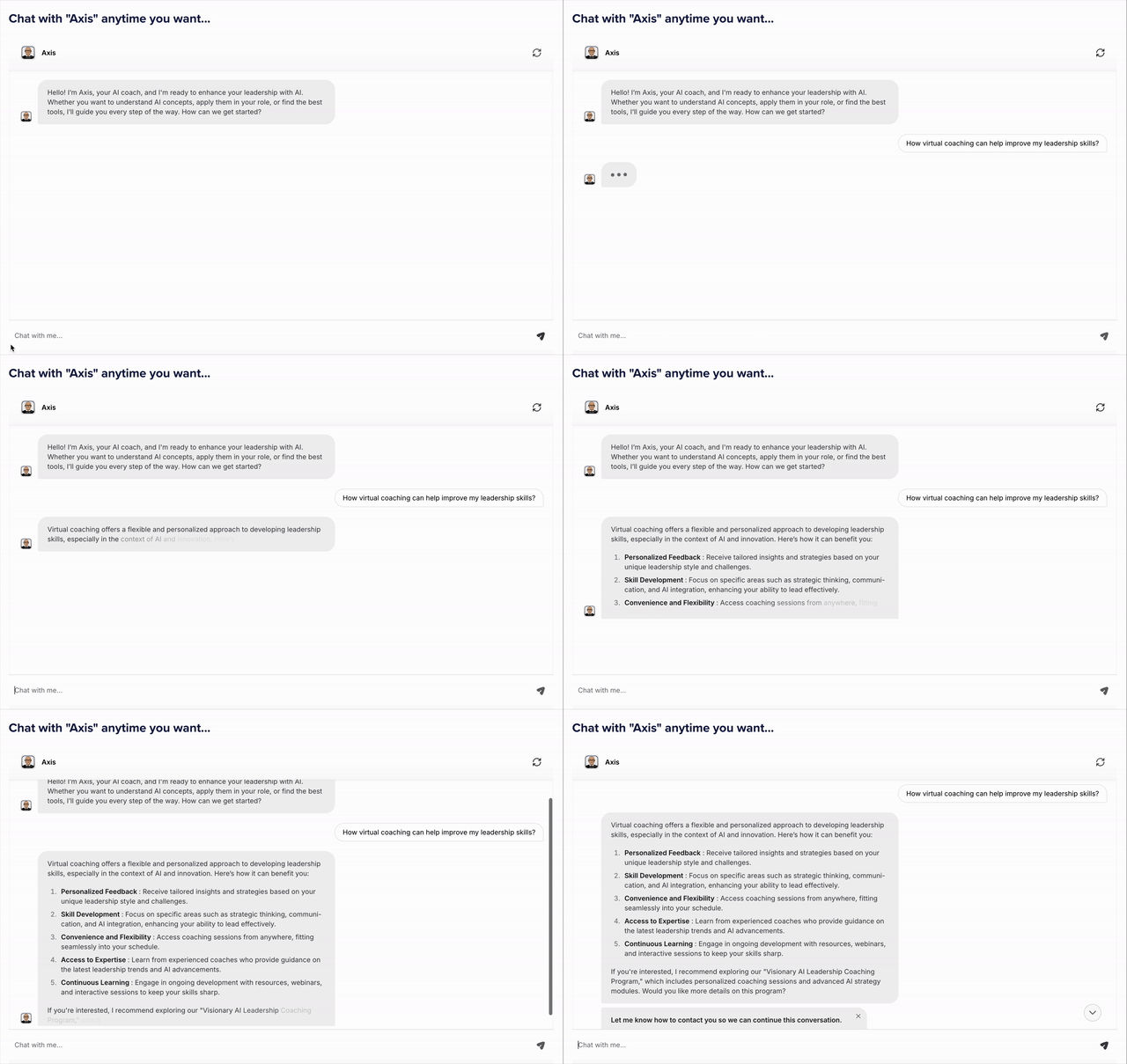
Building on this foundation of excellence, I’m thrilled to introduce Axis AI Coach, a smart assistant crafted specifically for leaders like you. Drawing on my decade of experience in enterprise IT, data analytics, and AI leadership, Axis goes beyond being a tool; it’s your trusted partner in navigating the complexities of modern leadership.
Axis offers a unique opportunity to turn insights into action. With personalized coaching, dynamic assessments, and tailored guidance, the Axis AI Coach provides the stability and direction needed to excel in the AI era. The name “Axis” reflects its role as a cornerstone for leaders seeking clarity, confidence, and success.
Whether you’re looking to streamline workflows, craft effective AI strategies, or enhance your decision-making, Axis AI Coach delivers real-world solutions grounded in proven expertise. And here’s the best part: for a limited time, you can try Axis entirely free for seven days. That’s right—full access to its knowledge and coaching capabilities at no cost.
This is your opportunity to explore how Axis can empower your leadership journey. Leadership in the AI era is about taking bold steps, and this is yours.
Not bad, right? Sign up today and let Axis AI Coach guide you to thrive in this exciting new frontier. There are a lot of things you can learn from it...




Comments ()